What is Sustainability?
Sustainability represents the essential capacity for all life to thrive on Earth while maintaining the Earth’s precious biodiversity and supporting ecological systems. However, rising populations and rampant consumerism is driving unsustainable practices characterized by disposables, relentless technological development, and inequitable resource distribution (Shrivastava, 1995, p. 938). The current global ecological footprint is 1.75 Earths, indicating a critical limit to human consumption and growth (Global Footprint Network , 2024).
The population consumes over 100 billion tonnes of material each year, with over 90% of all materials extracted wasted (Circle Economy, 2023, p. 17). For the past century, we have adhered to a linear ‘take-make-dispose’ economy, which has resulted in skyrocketing resource use, tripling in the last 50 years (United Nations Environment Programme, 2024, p. 17).
Wake Up Call – Created by Steve Cutts for the Gaia Foundation
Moreover, affluence has become a significant driver of material consumption, contributing to a global increase of 40% in resource extraction from 2000-2020, while population growth accounted for 27% (United Nations Environment Programme, 2024). This overconsumption has dire repercussions, with human activities releasing excessive carbon into the atmosphere, exceeding nature’s capacity to absorb it. Approximately 60% of the essential ecosystem functions have been degraded over the past 50 years, pushing us near critical planetary boundaries (World Resource Institute, 2005).
Tongan Climate Context
Tonga faces significant challenges due to limited physical resources alongside disaster prevalence and the impacts of climate change. Historically, Tongan people thrived through sustainable small-holding agriculture and diverse farming systems such as rotational fallow practices that maintained soil fertility and ecosystem health. However, growing population and urbanization have led to shortened fallow periods and declining fertility. To revitalize these practices, Tonga should prioritize agroecological approaches that enhance biodiversity, improve soil health, and promote the use of traditional crops that require fewer external inputs. Tonga could greatly enhance sustainable food security through regenerative agricultural methods and a circular economy valuing waste reduction and resource efficiency. Agriculture and forestry provided the majority of income to 75% of the population and 44% of exports in 2014 (Manaaki Whenua Landcare Research, n.d.).
Tonga’s Climate and Disaster Risk Management Profile – ADB
With increasing demand for concrete structures being predicted to rise, mainly due to economic growth – this trend could worsen environmental degradation through sand mining and exacerbate resource extraction post-disasters (Sevillano Gutierrez, Dodds, & Crete, 2019). Sustainable building practices, such as utilizing locally sourced materials and promoting wooden structures from sustainably managed forests, could help alleviate some of these pressures while preserving vital ecosystems. Furthermore, investment in renewable energy solutions is essential, with Tonga currently relying on imported fossil fuels for 98% of its energy (IRENA, 2023). Transitioning to renewable energy sources such as solar, wind, and biomass can provide economic resilience, reduce greenhouse gas emissions and enhance energy security (Weir, 2018).
Traditional Landholding & Residence
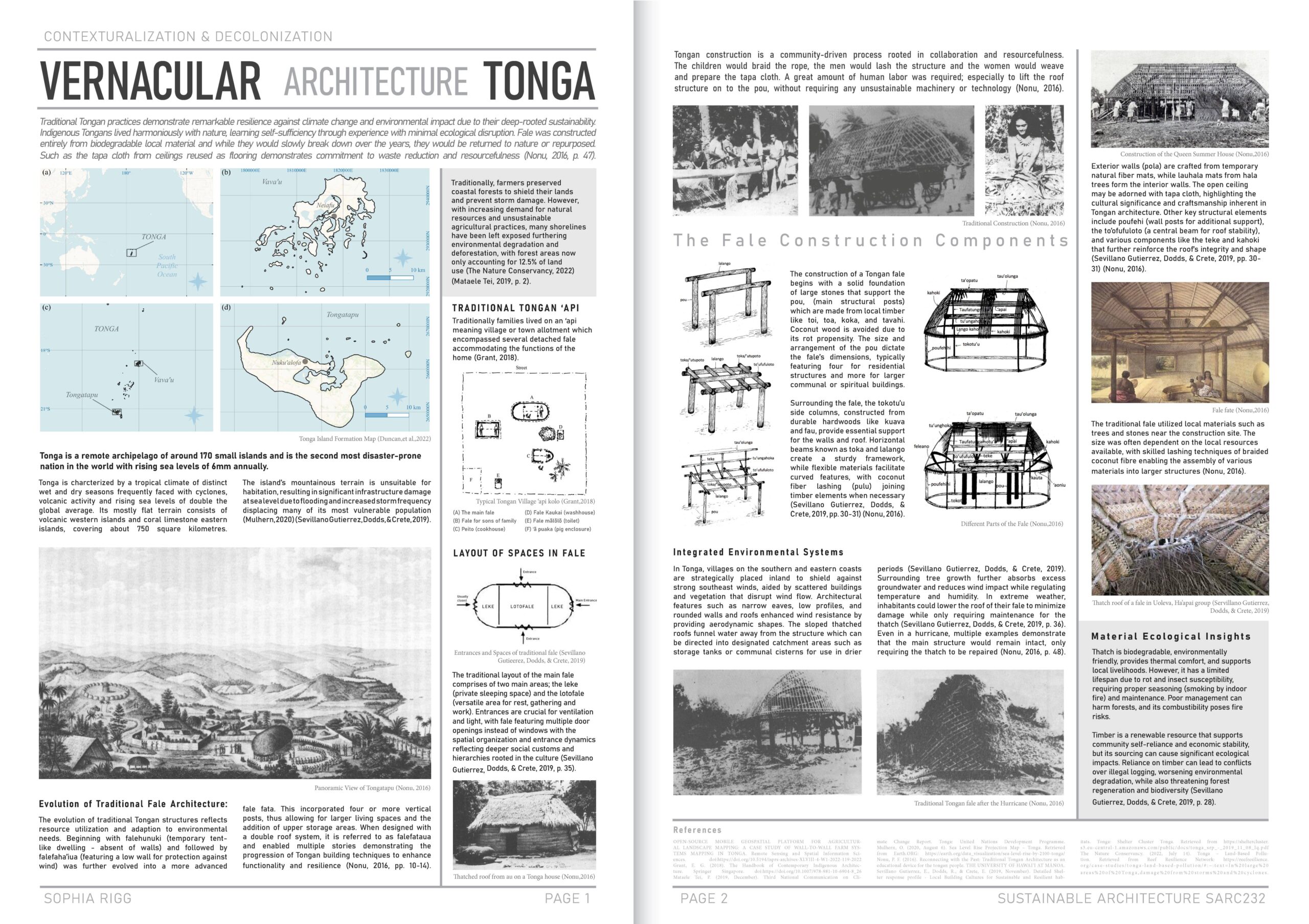
Discover the ingenuity of Tongan architecture and village life. Including plans, structural insights, and visuals that reveal the craftsmanship, culture, and sustainable practices of traditional fale.
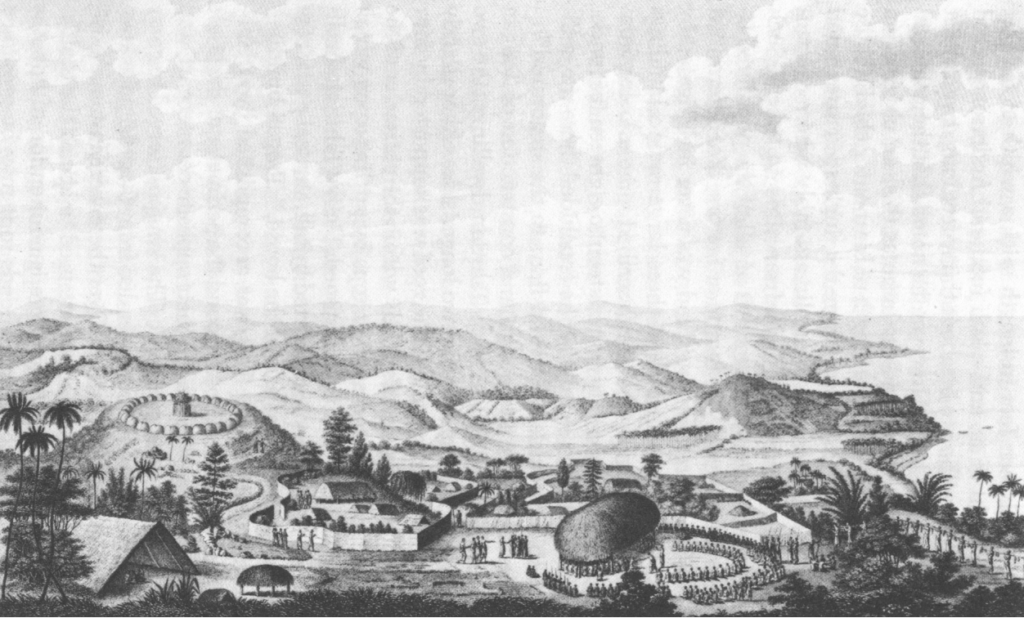
Panoramic View of Tongatapu (Nonu, 2016)
Decolonization & Design Resilience
The government must adopt policies and frameworks that prioritize sustainable natural resource management to reverse the current trend of environmental degradation; resulting from unsustainable agricultural and fishing practices, alongside population pressures (Pelesikoti, 2003). By fostering collaborative efforts among local communities and government, Tonga can enhance resource management, implement ecological restoration projects, and promote sustainable livelihoods. Thereby creating a resilient economy capable of weathering climate challenges while safeguarding its unique biodiversity. This collective shift towards sustainability will not only mitigate climate change impacts, but ensure equitable resource distribution and enhance the overall well-being of the Tongan population.
Vernacular Design Proposal
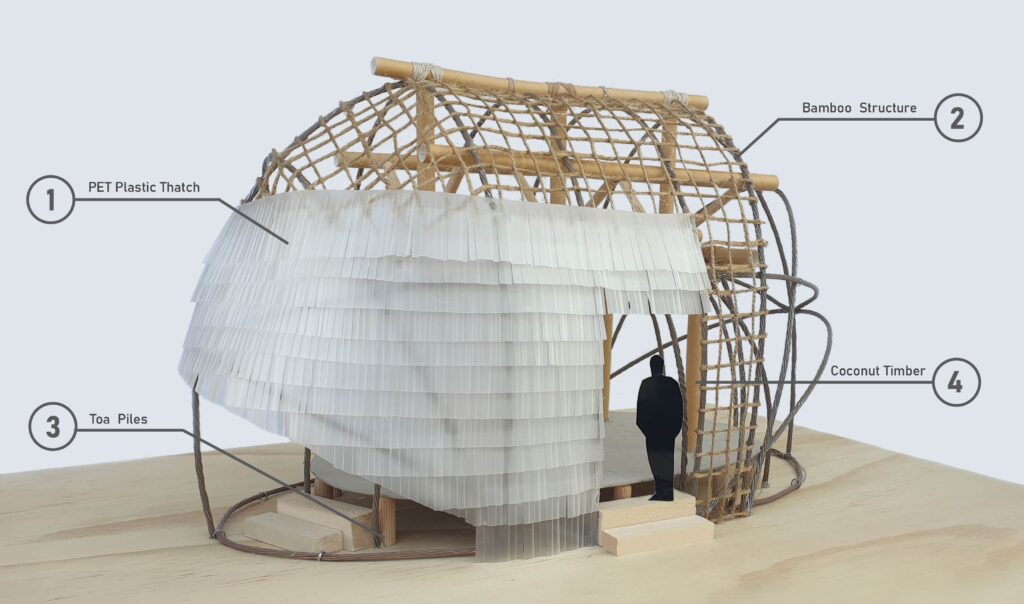
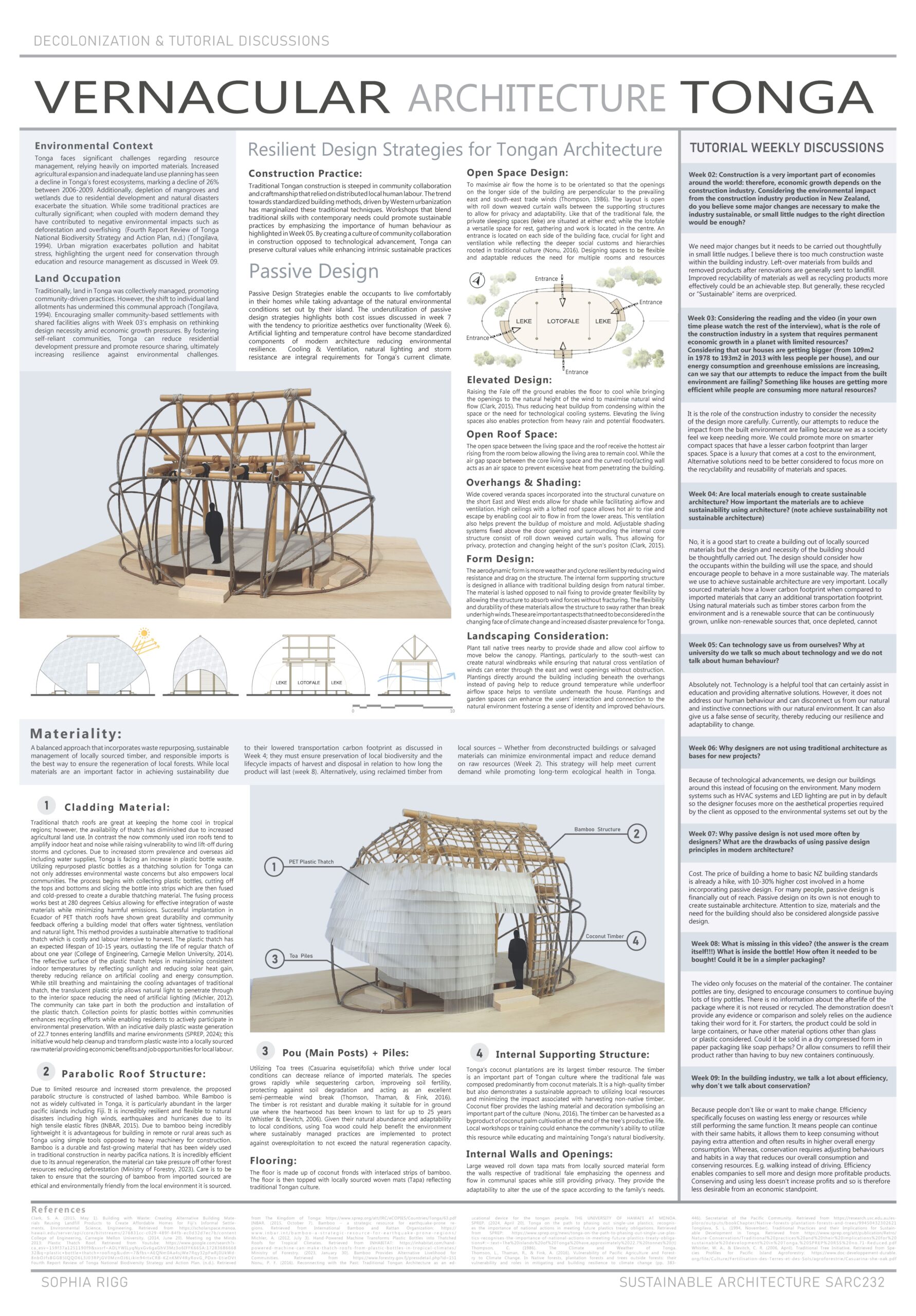
As the Earth’s resources dwindle, we must recognize that our planet operates within finite limits. Escalating resource demand is the main trigger of the triple crisis of climate change, biodiversity loss, and pollution (United Nations Environment Programme, 2024). To combat these challenges, we must embrace a paradigm shift towards regenerative and distributive practices inspired by nature; a circular economy focused on reducing, regenerating and redistributing resources (Circle Economy, 2023). Crucially, the capacity to accelerate or delay the consequences of these limits is determined by human responses. This transformation is vital for preserving biodiversity and securing a sustainable future for generations to come.
References
Circle Economy. (2023). The Circularity Gap Report . Amsterdam. Retrieved from https://www.circularity-gap.world/2023#download
Global Footprint Network . (2024). EarthOvershoot Day 1971-2024. Retrieved from Earth Overshoot day.
IRENA. (2023, August 8). Energy Profile – Tonga. Retrieved from https://www.irena.org/-/media/Files/IRENA/Agency/Statistics/Statistical_Profiles/Oceania/Tonga_Oceania_RE_SP.pdf
Manaaki Whenua Landcare Research. (n.d.). Land use in Tonga. Retrieved August 2024, from Pacific Soils Portal: https://tonga-psp.landcareresearch.co.nz/useful-links/land-use-in-tonga/
Nonu, P. F. (2016). Reconnecting with the Past: Traditional Tongan Architecture as an educational device for the tongan people. THE UNIVERSITY OF HAWAI‘I AT MĀNOA.
Pelesikoti, N. (2003). Sustainable resource and environmental management in Tonga: current situation, community perceptions and a proposed new policy framework. University of Wollongong Thesis Collection 1954-2016. Retrieved from https://ro.uow.edu.au/theses/1934/
Sevillano Gutierrez, E., Dodds, R., & Crete, E. (2019, November). Detailed Shelter response profile – Local Building Cultures for Sustainable and Resilient habitats. Tonga: Shelter Cluster Tonga. Retrieved from https://sheltercluster.s3.eu-central-1.amazonaws.com/public/docs/tonga_srp_-_2019_11_08_lq.pdf
Shrivastava, P. (1995, October). The role of corporations in Achieving Ecological Sustainability. The Academy of Management Review, 20, No. 4. Retrieved from https://www.jstor.org/stable/258961
UNEP. (2016). Global Material Flows and Resource Productivity – An Assessment Study of the UNEP International Resource Panel. Paris. Retrieved from https://www.resourcepanel.org/reports/global-material-flows-and-resource-productivity-database-link
United Nations Environment Programme. (2024). Global Resource Outlook. Bend the Trend – Pathways to a liveable planet as resource use spikes. Retrieved from https://resourcepanel.org/reports/global-resources-outlook-2024
Weir, T. (2018). Renewable energy in the Pacific Islands: Its role and status. Renewable and Sustainable Energy Reviews, 94, 762-771. Retrieved from https://www.sciencedirect.com/science/article/pii/S1364032118304131
World Resource Institute. (2005). Ecosystems and Human Well-being . Washington, DC: Island Press. Retrieved from https://www.millenniumassessment.org/documents/document.356.aspx.pdf