Integrated Environmental Systems

An Integrated environmental system within architecture takes into account a buildings relationship with its physical environment such as climate, solar radiation and heat gain/loss. It takes into consideration, occupant health, comfort and performance in relation to the physical environment as well as improving energy use and environmental sustainability. Thoughtful design decisions enable a building to be warm, well-ventilated, and flooded with natural light all while remaining efficient to run, without consequence to its surroundings. The following investigation looks at assessing and synthesising the climate and energy data for this home within the Ohakea weather zone. 

. . . Environmental Analysis . . .

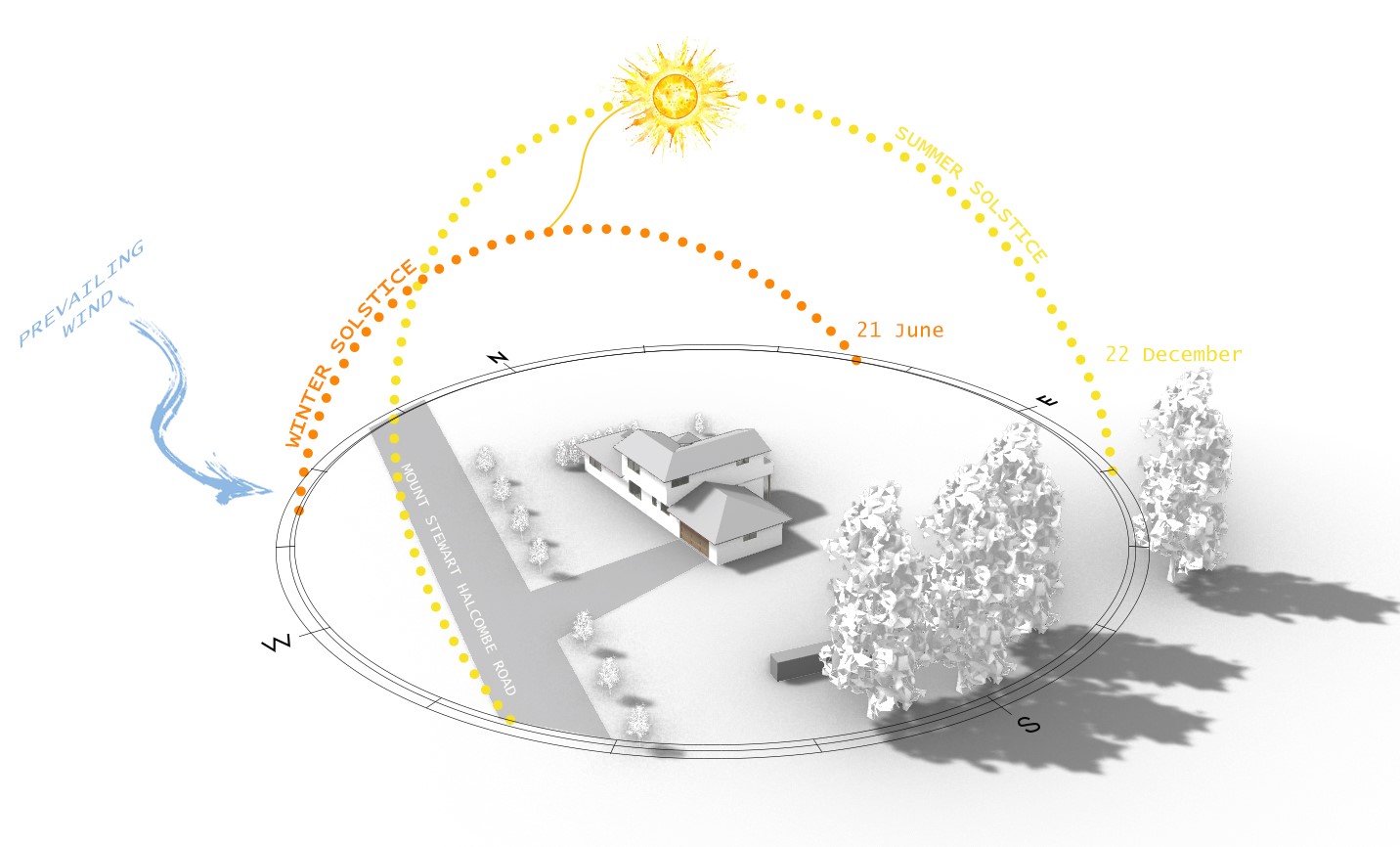
Sunpath Diagram for Summer and Winter Solstice

Easterly Sunrise - Westerly Sunset
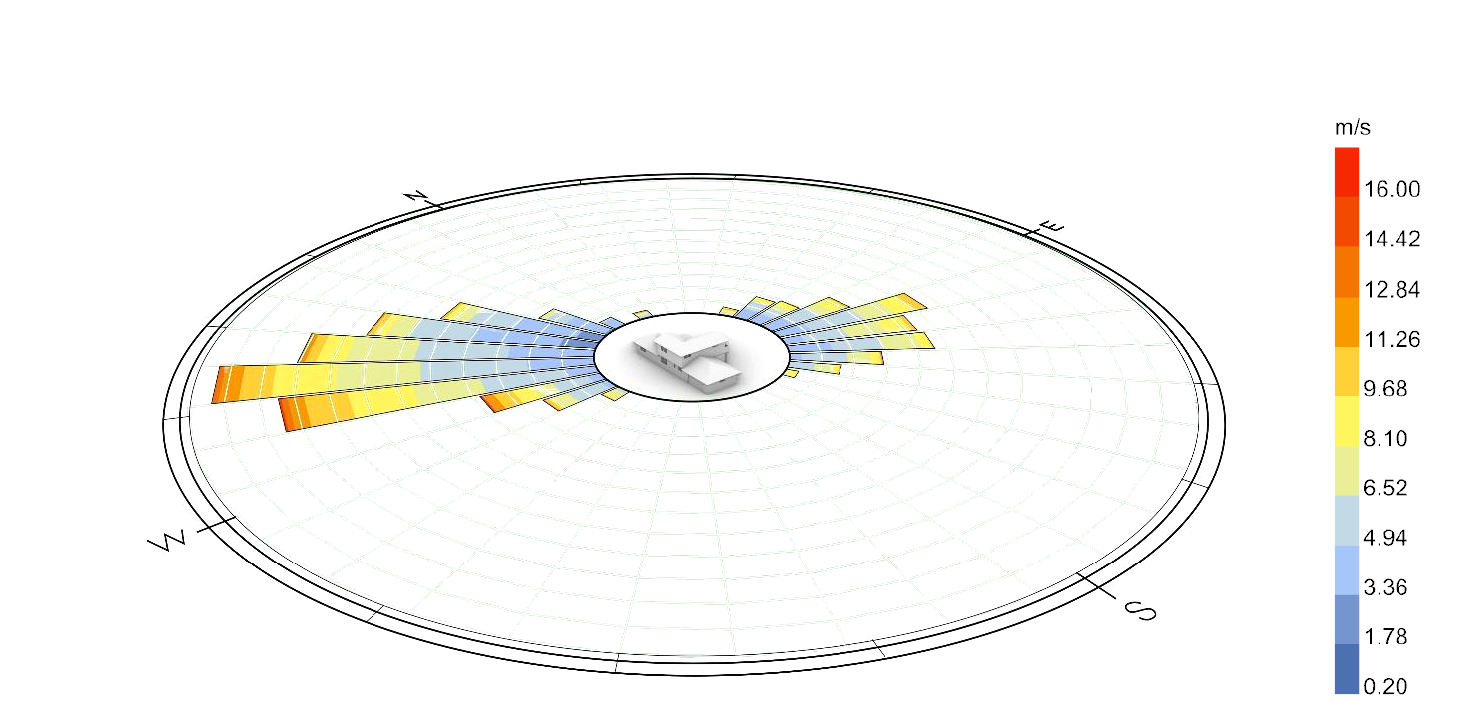
Wind Intensity and Direction of Ohakea

High Wind Zone with Prevailing Westerly Winds
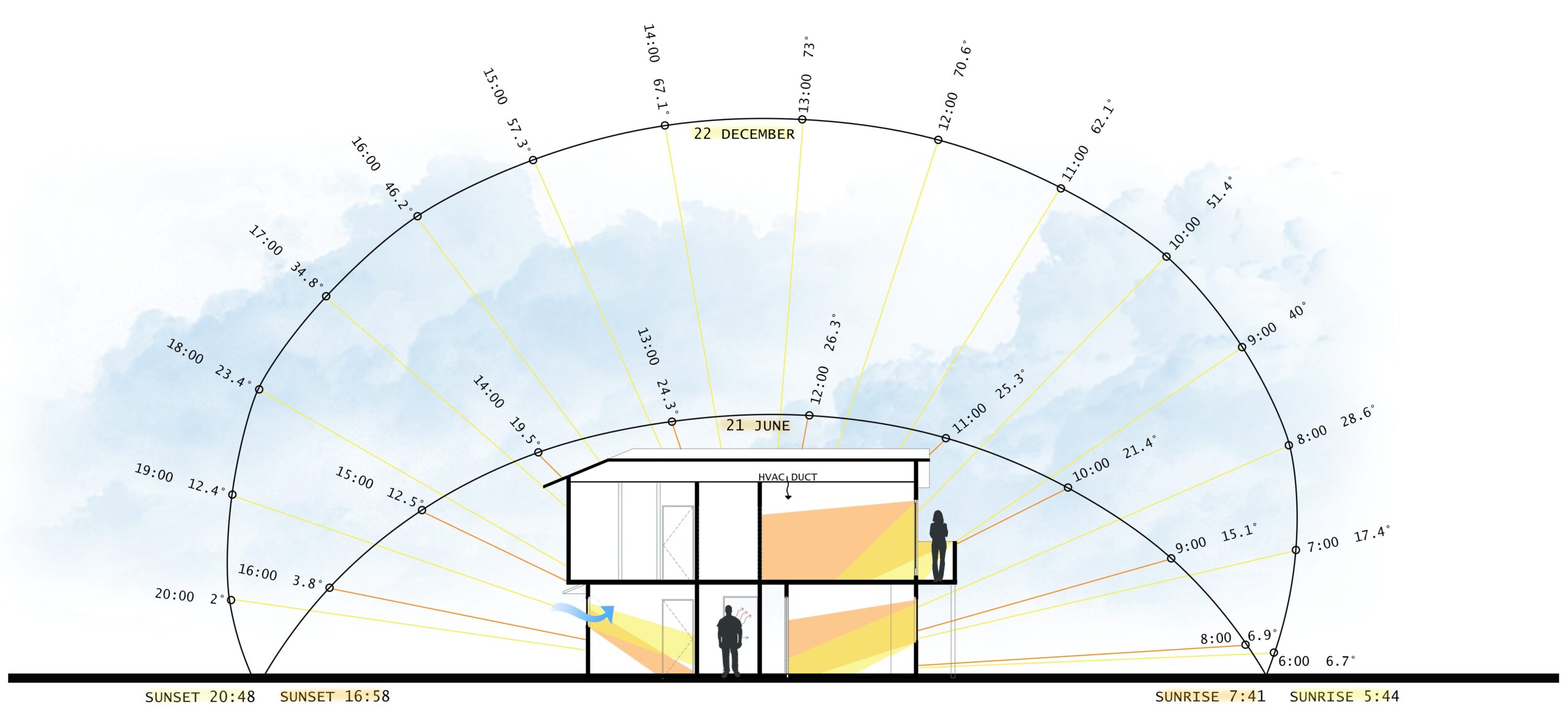
Section A - Interior Energy Distribution system

Summer & Winter Solstice Sun rays per hour of the day
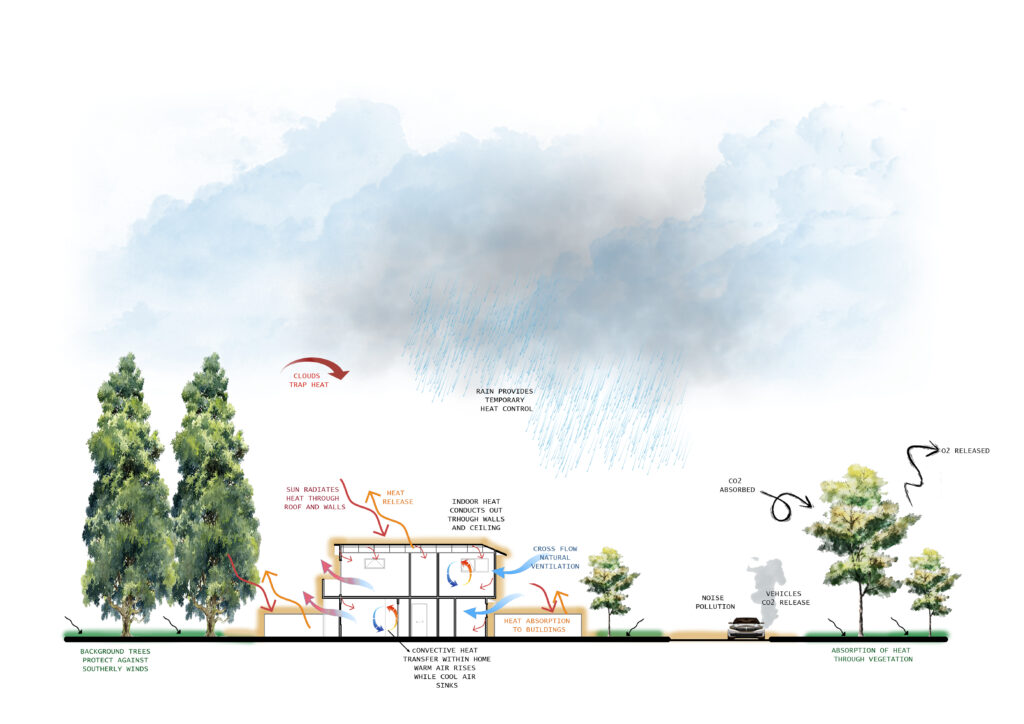
Existing Environmental System

The home’s main energy distribution system is through an HVAC system in the form of a split heat pump system. 
During the summer solstice, the roof receives the maximum amount of radiation which heats the roof space and upper floor making both of the first-floor bedrooms a sweltering and uncomfortable place to reside.

A solar radiation simulation was created using grasshopper radiation analysis in Rhino 7

Environmental System Diagram for Home and Surroundings

Improved Environmental System Design Proposal

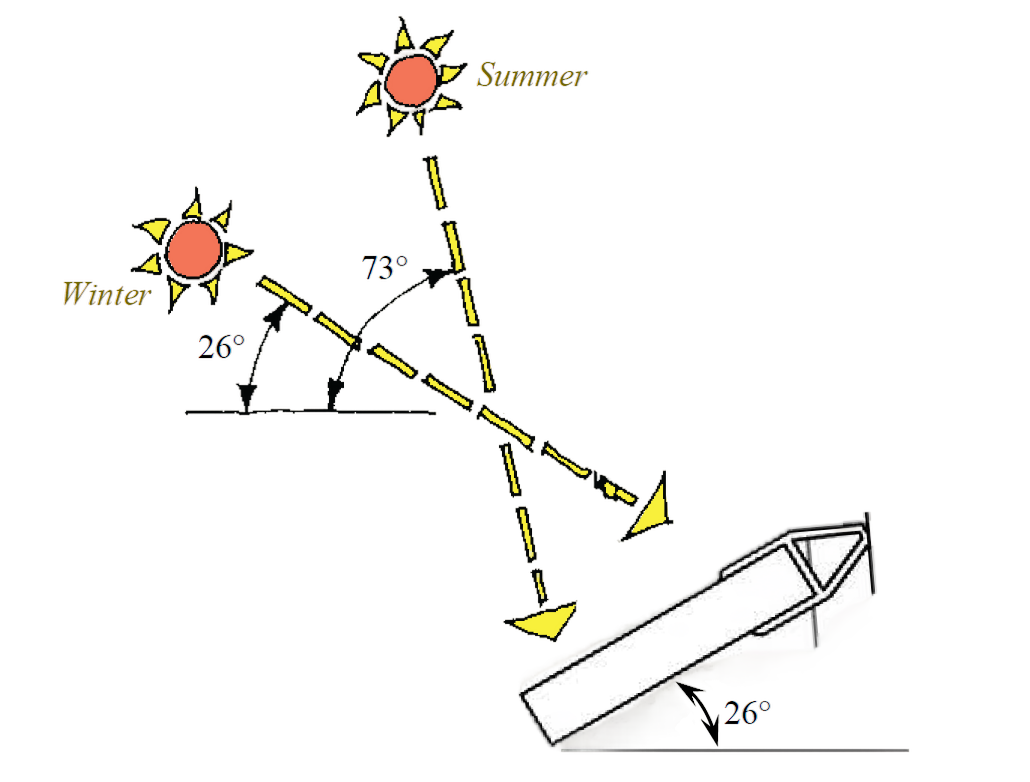
Angle of Midday Sun

Determine louvre angle based on observed distribution system for midday sun angles.
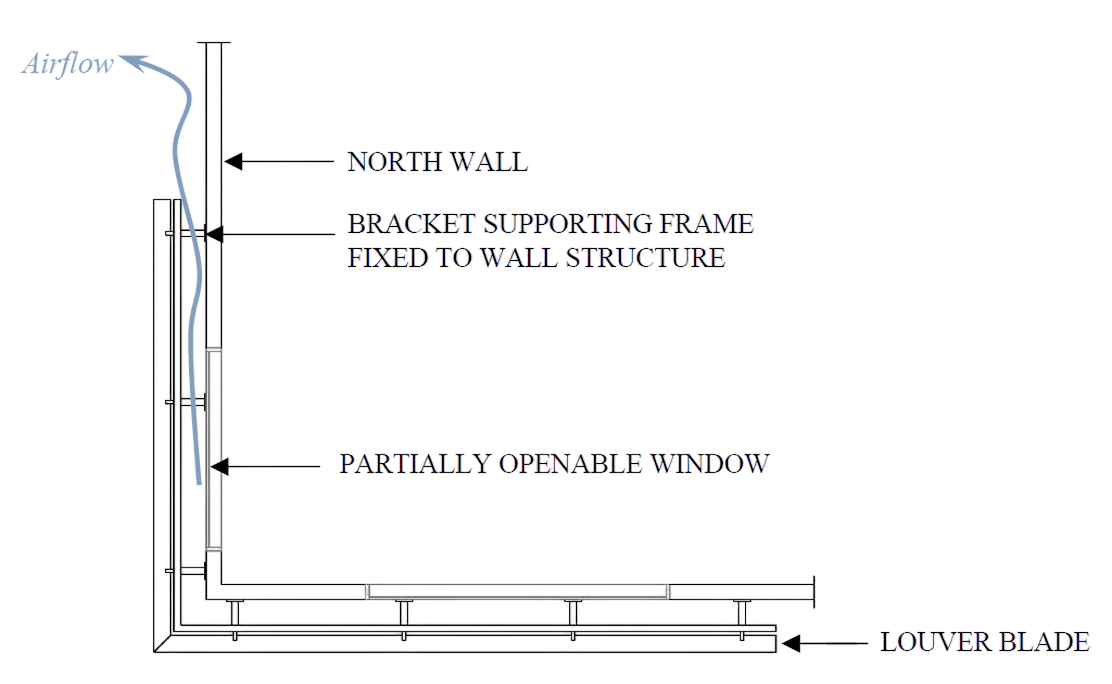
Louver and Frame Fixing Plan

The frame protrudes from the wall with brackets, enabling airflow between the louvers and window. This enhances temperature regulation by deflecting heat away and cooling the interior space.
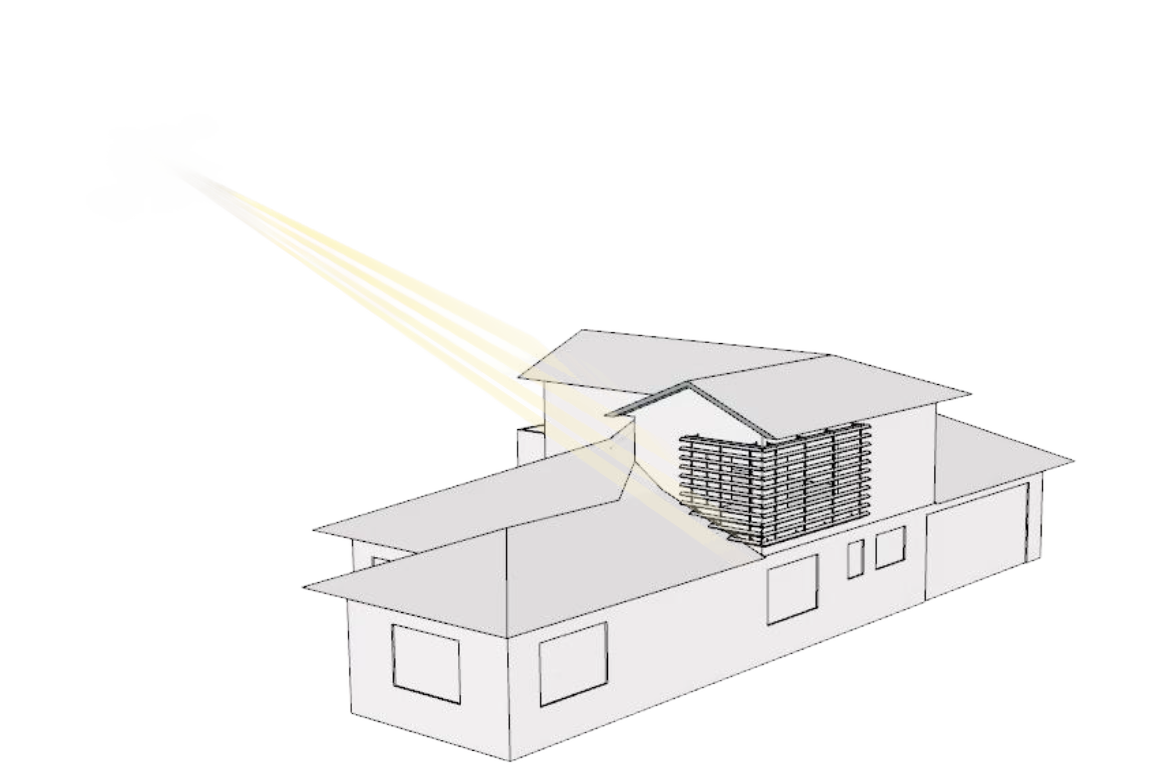
Proposed horizontal louver system

The first-floor bedroom is subject to significant solar radiation and glare. Therefore, an implemented angled louvre design system will effectively reflect excess solar gain and light glare.
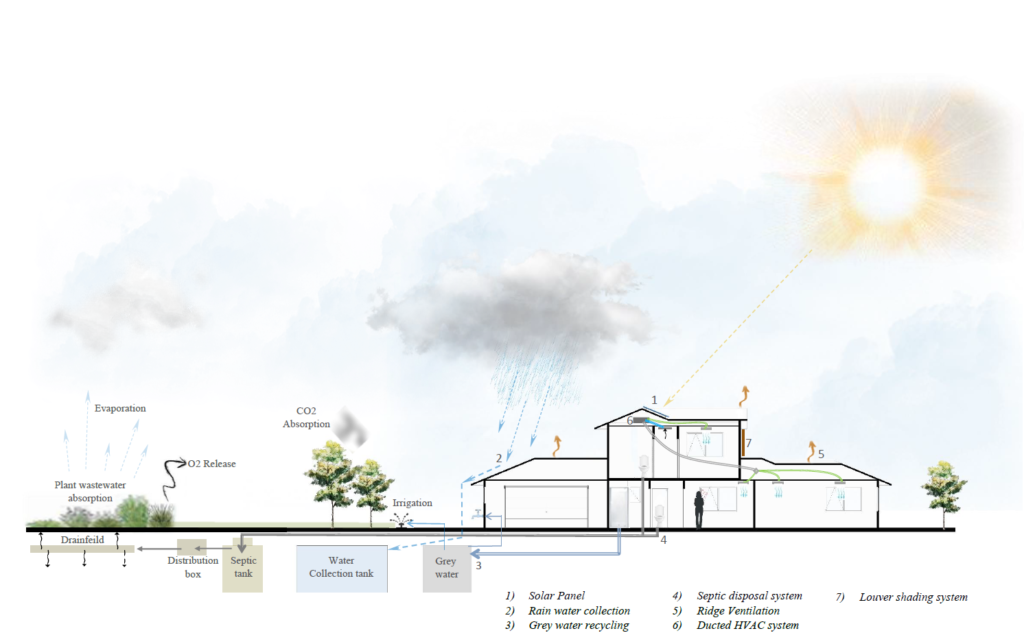
Alternative System Diagrams

Integrating solar energy system: Solar energy converts sunlight into electricity stored in batteries or connected to grid. It should face north for maximum light.
Water management system: Collect rainwater from roof for water needs, collect greywater from basins/showers for irrigating plants.
Septic tank treats domestic wastewater and releases treated water to drainfield. Planting over the drainfield optimizes system performance.
Reducing solar gain: Surrounding landscaping reduces building heating/cooling loads. Deciduous trees block summer sun without reducing winter sun. Vegetation absorbs heat and cools through evapotranspiration. Trellises with vines reflect solar radiation and absorb CO2. Increased plantings improve microclimate conditions.